| Type | |
|---|---|
| Package | |
| Sensor Size | |
| Video Modes | |
| Stabilization | |
| Subject Tracking | |
| Display | |
| Microphones | |
| External Microphone Support | |
| Storage | |
| Memory Card Support | |
| Connectivity | |
| Battery Capacity | |
| Battery Life | |
| Features | |
| Color | |
| Release Year |

Price range: KShs 1,529,000 through KShs 1,796,000
Price is indicative and may change when stock arrives.
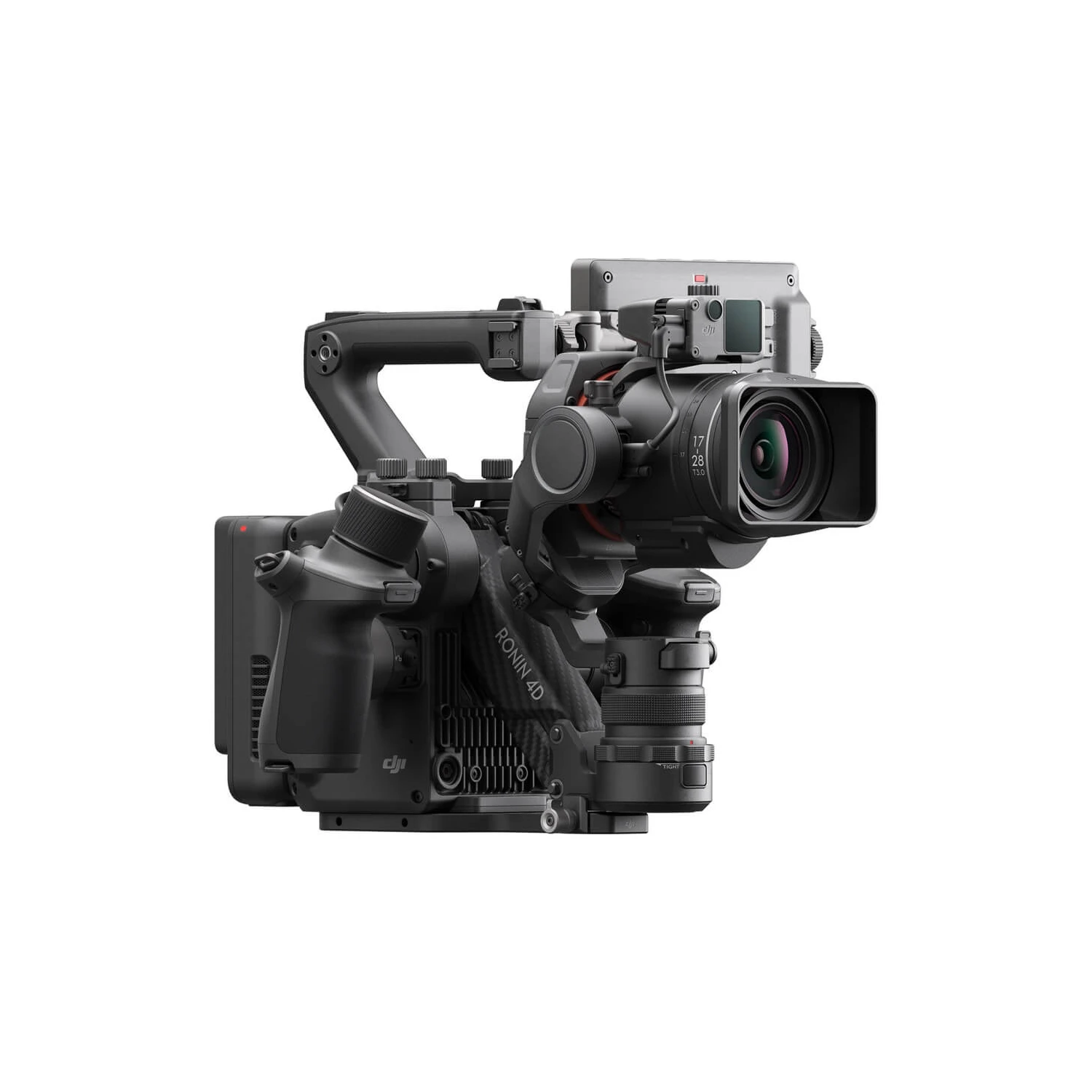
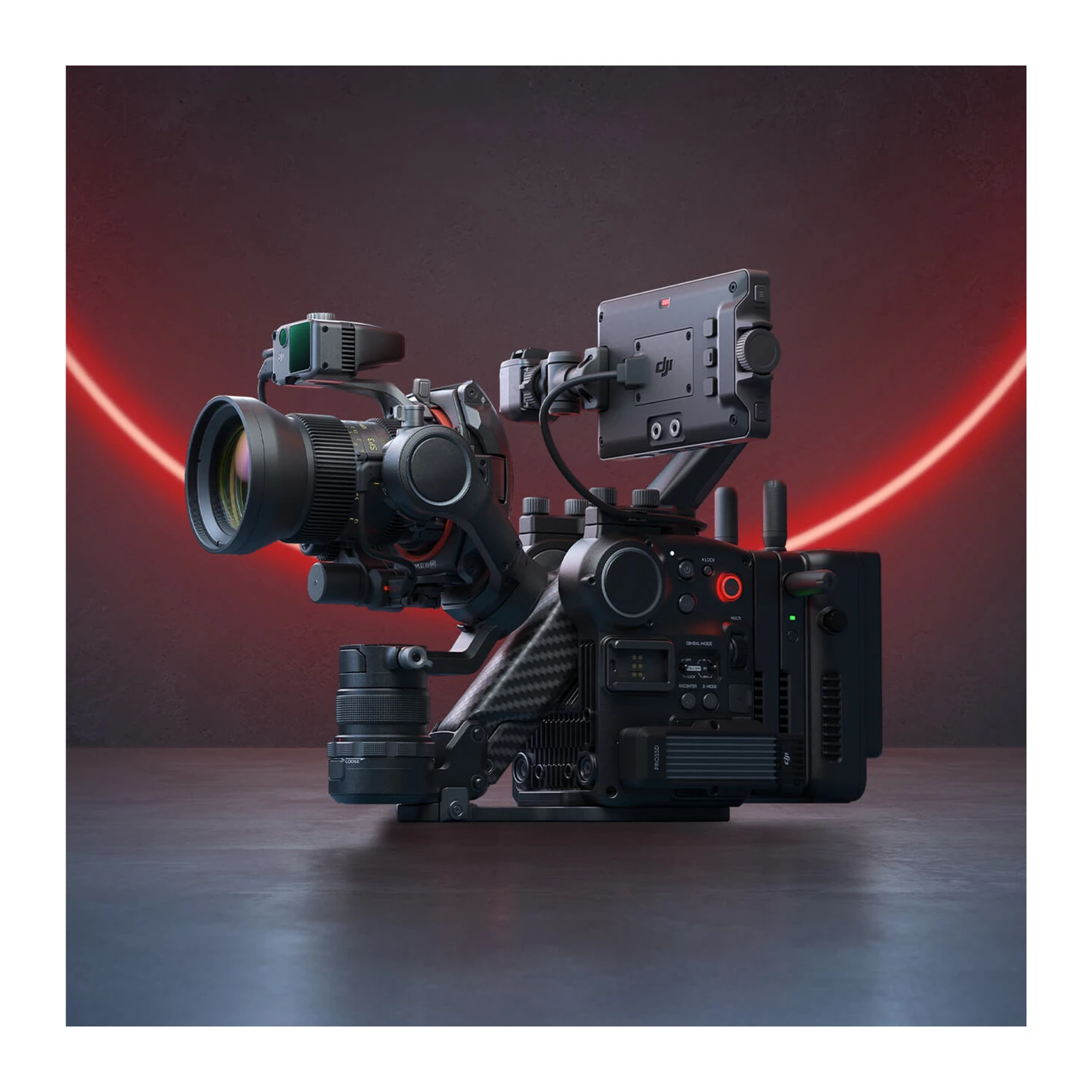
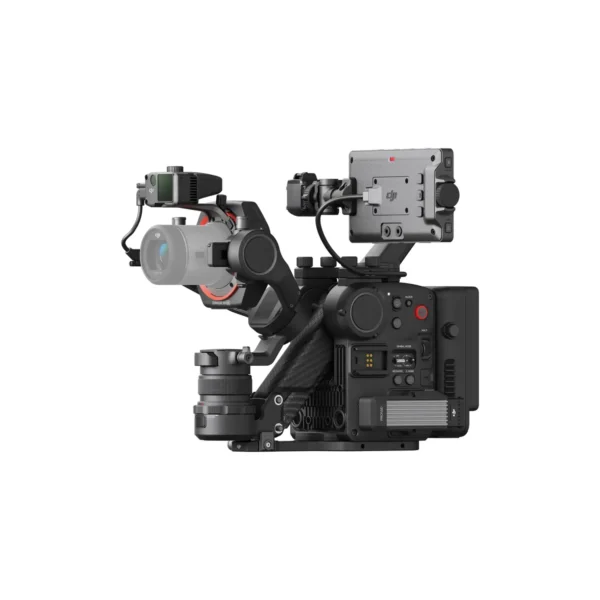
In-stock alternativesA full-frame cinema camera with an integrated four-axis gimbal, LiDAR focusing, built-in ND filters and up to 8K/60fps or full-frame 4K/120fps recording. Choose the Standard Combo with the 17–28mm T3.0 lens, or the Basic Package for a compatible lens setup of your own.
Compare 2 configurations. Open an option to choose its finish and check the exact price and availability.
Choose configurationsCompare the listed options, then open the configuration that fits.
No configurations match. Try another search or show all options.
Explore the details that matter.
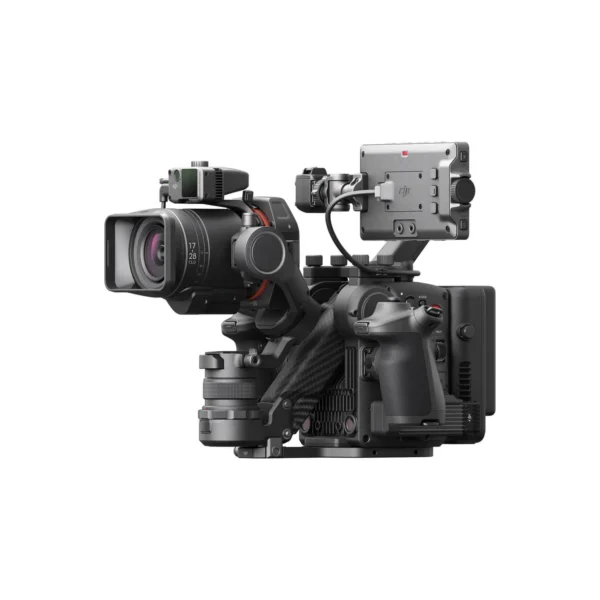
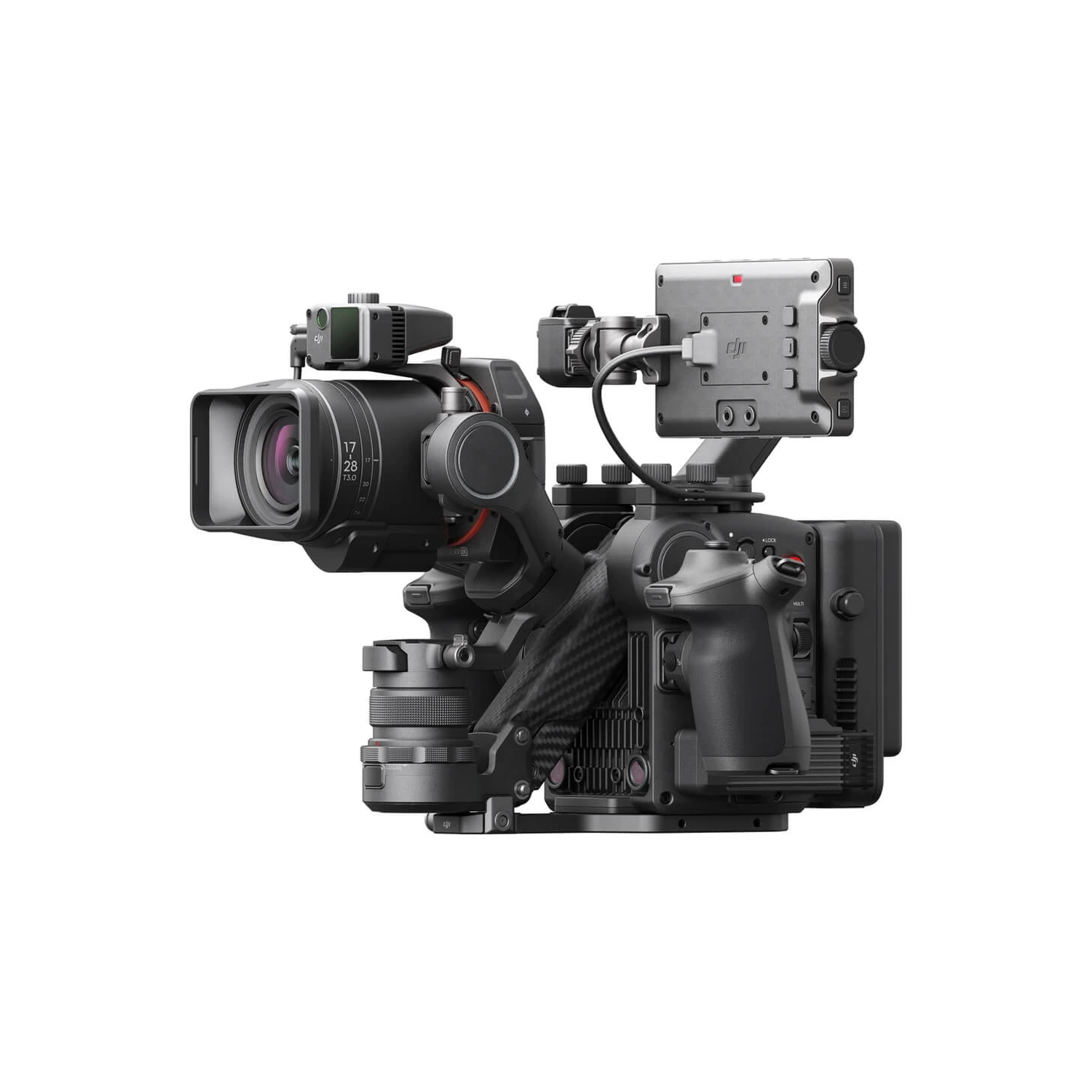
The DJI Ronin 4D-8K price in Kenya is Price range: KShs 1,529,000 through KShs 1,796,000. This full-frame cinema camera combines 8K capture, four-axis stabilisation and LiDAR focusing for productions built around moving shots. It suits commercial crews, filmmakers and owner-operators who want detailed footage with room to crop, reframe and finish in post. If your delivery is primarily 4K, compare the DJI Ronin 4D-6K before committing the extra budget to resolution and recording media.
The Zenmuse X9-8K camera supports full-frame 8K at up to 60fps in 17:9, with up to 75fps available in the wider 2.39:1 mode. Full-frame 4K/120fps provides a slow-motion option without the 6K model’s Super 35 crop at its highest frame rate. These are mode-dependent limits, so choose resolution, aspect ratio, codec and storage together.
Extra resolution is most useful when a production needs alternate crops, detailed plates or more flexibility in a lower-resolution finish. It also increases the demands on copying, backups and editing. Budget for the complete recording workflow rather than treating 8K as a free upgrade to every project.
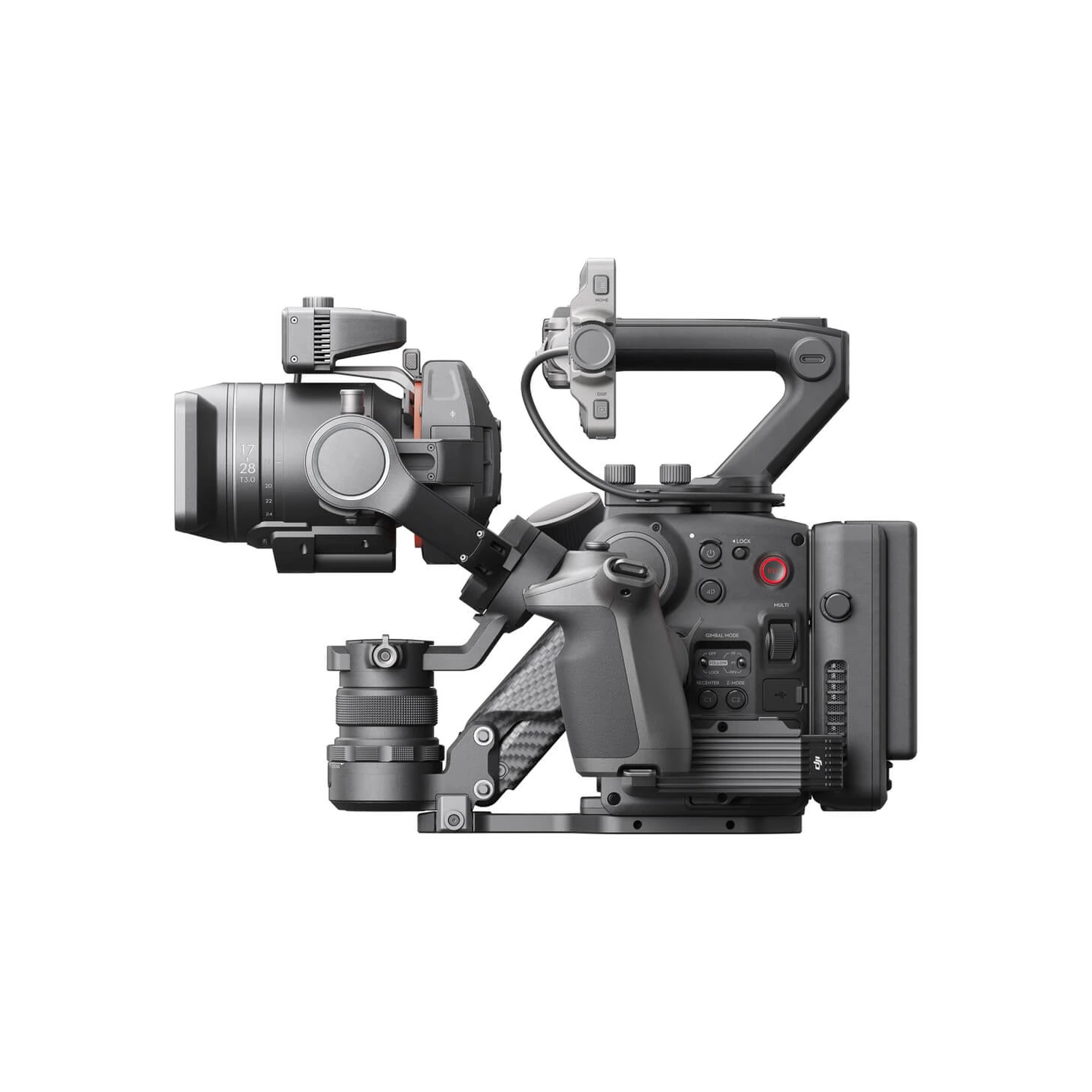
The integrated gimbal handles pan, tilt and roll, while the Z-axis helps reduce the vertical movement introduced by walking. That makes Ronin 4D especially relevant for following a performer through a location or moving between subjects without rebuilding a separate camera-and-gimbal rig.
Good balance, lens choice and operator movement still matter. The system is a substantial handheld cinema rig, and stabilisation does not make every footstep or abrupt movement disappear. Rehearse the route and check clearance around the moving camera head before recording.
LiDAR ranging, ActiveTrack Pro and the focus controls help an operator manage framing and focus during movement. Automated Manual Focus lets the operator intervene rather than giving up creative control. Compatible manual lenses need the appropriate X9 Focus Motor for motor-driven autofocus; that motor is a separate accessory.
Internal physical ND filters extend to nine stops, helping maintain the intended shutter and aperture as the light changes. The X9-8K uses dual-native ISO 320/1600 by default, or 800/4000 with Dynamic Range Expansion enabled. Select the exposure mode for the shot and test the result instead of assuming a higher ISO setting is always cleaner.
The Standard Combo adds the DJI DL PZ 17–28mm T3.0 ASPH lens to the 8K camera system. This wide zoom is a practical starting point for moving through interiors, environmental shots and establishing coverage. It is not a replacement for every portrait, telephoto or specialist cinema lens a production may need.
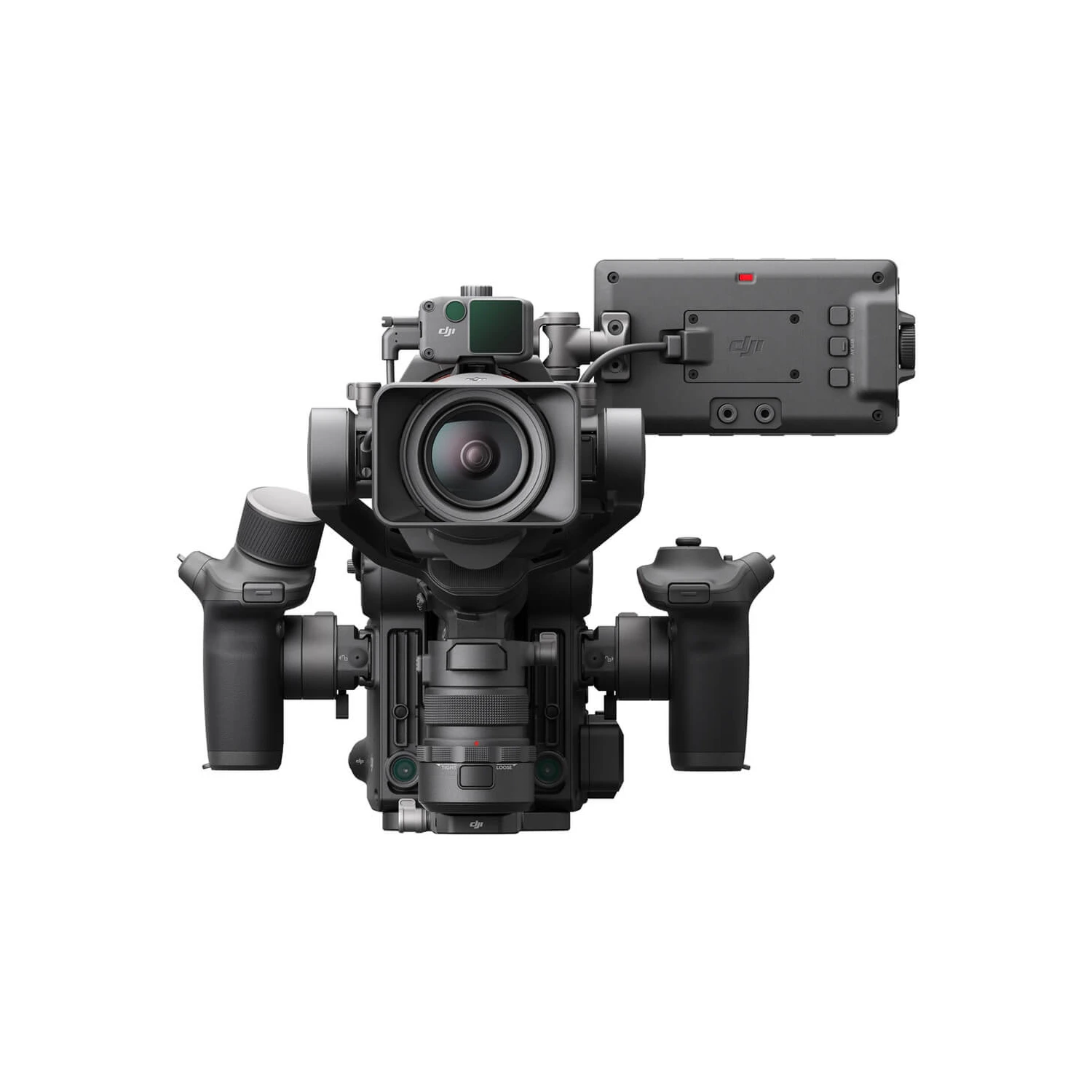
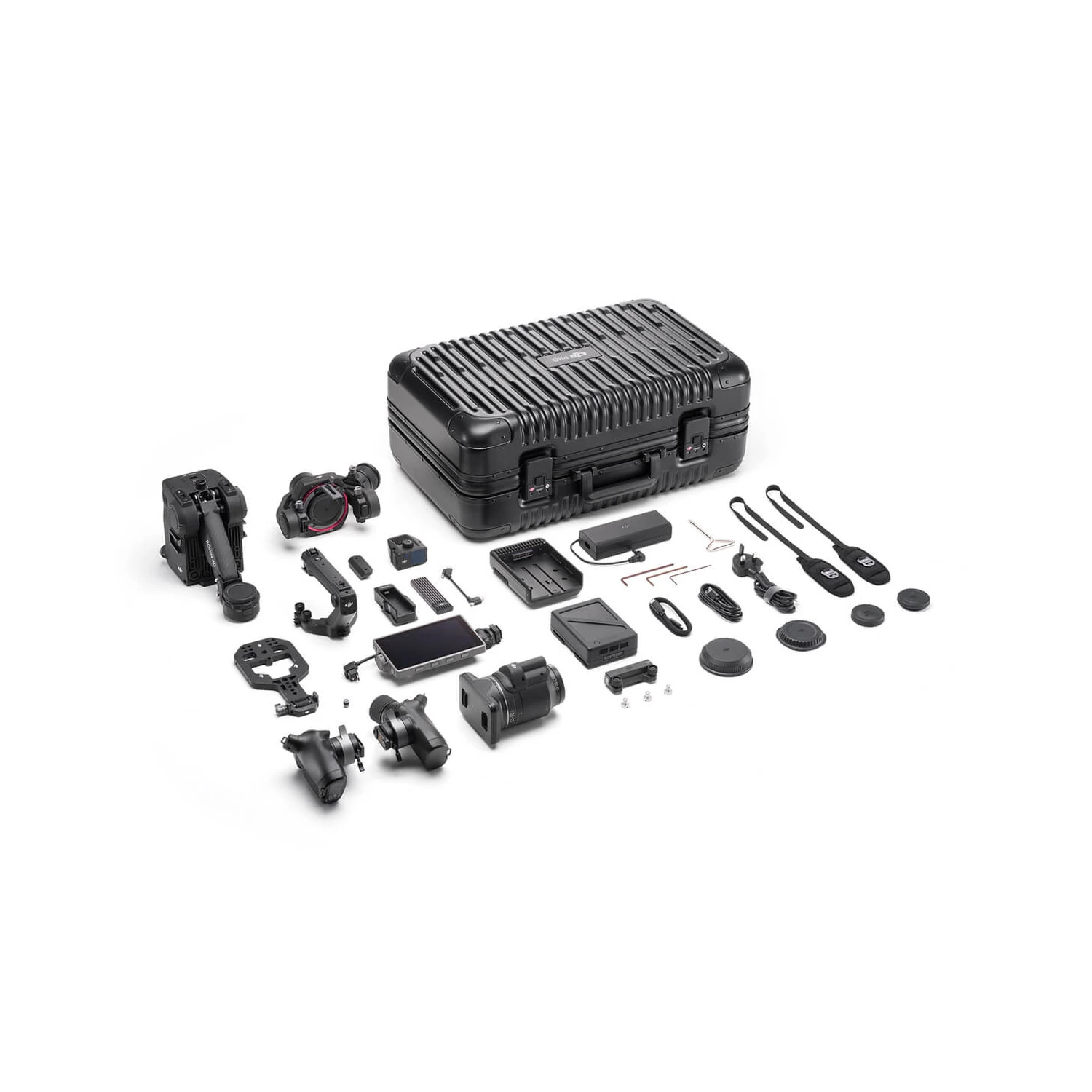
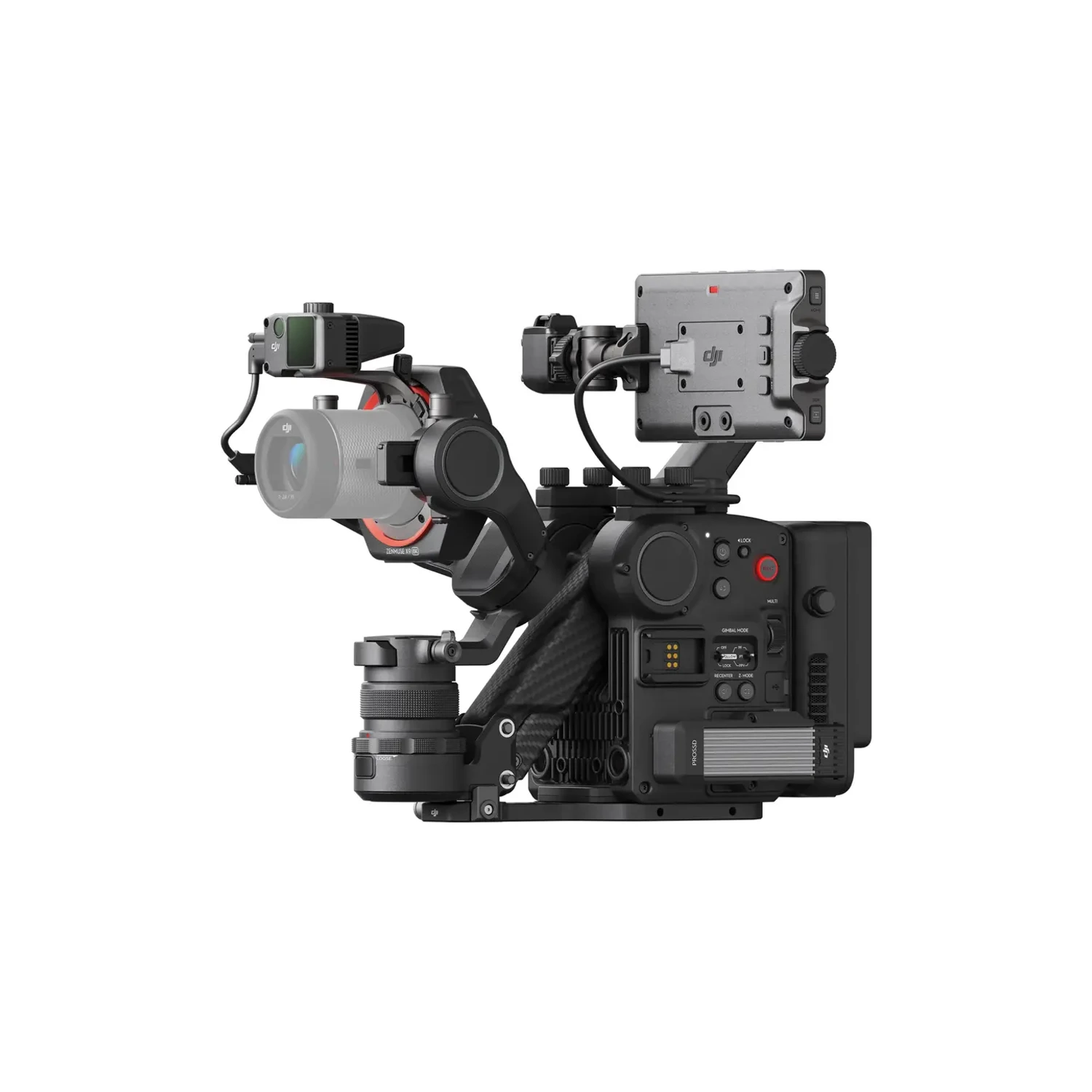
The Basic Package omits that lens but retains the PROSSD 1TB, PROSSD Mount and Ronin 4D RAW License Key in DJI’s package list. It makes sense when you already own a suitable lens or want to choose different optics. Both packages include the main monitor, hand grips, LiDAR range finder and TB50 power accessories. Lens mounts, physical clearance and balance must be checked against DJI’s lens compatibility guidance before assuming an existing lens will work.
The included PROSSD gives the 8K packages dedicated recording media. A RAW licence enables ProRes RAW recording, but editing-software support should be checked before choosing that workflow for a job. ProRes and H.264 options serve different production needs; consult DJI’s current recording specifications for the exact camera, codec and frame-rate combination.
The included 5.5-inch main monitor is for the operator. Wireless viewing and remote camera control require the optional Ronin 4D Video Transmitter and compatible remote-monitor equipment. Do not confuse that wireless system with the monitor supplied in the box. XLR, SDI and timecode connectivity are available through the separate expansion plate.
The supplied TB50 battery is rechargeable. DJI’s approximately 150-minute runtime is a controlled test with the camera stationary and the Z-axis inactive; moving the gimbal and using Z-axis stabilisation reduce it. Spare batteries, media turnaround and charging time belong in the production plan.
For ground and aerial coverage on the same project, the DJI Inspire 3 is a separate aerial-camera option, not an accessory for this rig. Match footage through a planned colour workflow rather than assuming two DJI cameras will look identical automatically. The official videos below explain the Ronin 4D system and demonstrate the 8K model.
| Type | |
|---|---|
| Package | |
| Sensor Size | |
| Video Modes | |
| Stabilization | |
| Subject Tracking | |
| Display | |
| Microphones | |
| External Microphone Support | |
| Storage | |
| Memory Card Support | |
| Connectivity | |
| Battery Capacity | |
| Battery Life | |
| Features | |
| Color | |
| Release Year |
The 8K model uses the X9-8K camera for higher-resolution recording and full-frame 4K/120fps. The 6K model reaches 6K and uses a Super 35 2.39:1 mode at 4K/120fps. Both use the Ronin 4D stabilised camera platform.
Yes, in the full-frame 2.39:1 mode. Full-frame 17:9 8K reaches 60fps. Available modes also depend on the chosen codec and approved recording media.
Standard Combo includes the DJI DL PZ 17–28mm T3.0 ASPH lens. Basic Package omits that lens. DJI lists the PROSSD 1TB, PROSSD Mount and RAW License Key with both 8K packages.
No. It is a Ronin 4D camera system with the body, X9-8K camera, operator monitor, grips, LiDAR, battery accessories and recording media. It is distinct from buying the Zenmuse X9-8K gimbal camera alone.
The Standard Combo includes the 17–28mm T3.0 zoom. Basic Package requires a compatible lens purchased separately or already owned.
Possibly, with the correct mount and a lens listed as compatible. Mount type alone does not guarantee clearance, balance or focus-control support. Check DJI’s lens compatibility guidance for the exact lens and required accessories.
Compatible manual lenses require the DJI Zenmuse X9 Focus Motor for motor-driven focus. Follow DJI’s setup and calibration procedure; the focus motor is not listed in these standard package contents.
Both listed 8K packages include DJI PROSSD 1TB, its mount and the Ronin 4D RAW License Key. Activate the licence and check your editing software before planning a ProRes RAW workflow.
No. Use DJI-recommended media and check the recording-mode limits. Support for a storage type does not mean every drive can record every resolution, codec or frame rate.
The camera supports an optional wireless system. The Ronin 4D Video Transmitter and compatible remote monitor are separate; the included High-Bright Main Monitor is the operator display.
The body provides built-in stereo microphones and a 3.5mm audio input. XLR, SDI and timecode connections require the optional Ronin 4D Expansion Plate.
DJI specifies approximately 150 minutes in a stationary recording test with a balanced gimbal and Z-axis off. Active camera movement and Z-axis use shorten runtime, so plan spare batteries for production.
No. It helps compensate for vertical movement, but balancing, walking technique and route planning still affect the shot. The Z-axis is not available in underslung mode.
No. Protect the camera from rain and wet conditions; do not treat it as an action camera or weatherproof outdoor rig.
DJI supports replacing the X9-6K gimbal camera with the separately purchased X9-8K and updating firmware. This is a hardware upgrade, not an 8K unlock through firmware alone.
Brand warranty terms depend on the exact unit, supplier and service region. Keep the purchase invoice and confirm coverage and exclusions at checkout.
Similar products selected by their core specifications and price.